ByJohn A
How Enterprises Build Automation Architectures
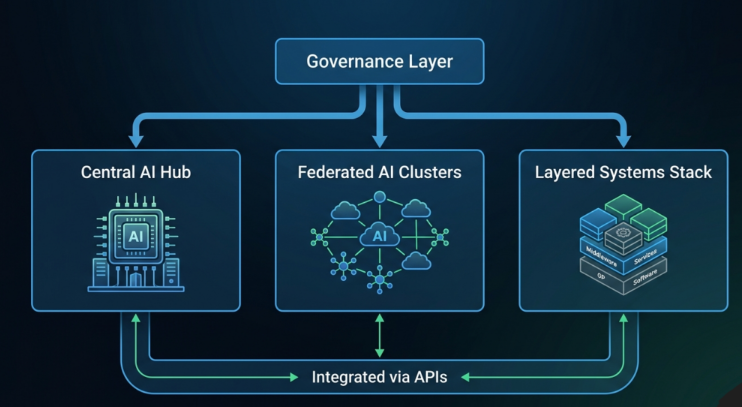
Enterprises design automation architectures as an integrated blueprint that aligns people, processes, data, and technology. They select layered, interoperable components with explicit interfaces and governance to enable scalable reuse. Resilience, observability, and security are built in through modular telemetry and continuous risk assessment. Data contracts standardize exchanges, while federated teams pursue autonomy with accountability. The approach remains adaptable yet disciplined, setting the stage for federation and enterprise-wide evolution—a path that invites careful consideration of its trade-offs and future needs.
What Is an Enterprise Automation Architecture
An enterprise automation architecture defines the integrated blueprint that aligns people, processes, data, and technologies to enable scalable, repeatable outcomes across the organization.
It coordinates process orchestration, governance patterns, and data contracts to ensure system reliability.
The framework supports operator dashboards, clear change management, and adaptable interfaces, empowering teams with freedom while maintaining disciplined, scalable standards across governance and operation.
See also: fangchanxiu
Choosing the Right Automation Layers and Data Contracts
Decisions favor minimal coupling, explicit interfaces, and governance to sustain freedom through predictable interoperability and evolving automation layers aligned with strategic objectives.
Designing for Resilience, Observability, and Security
The approach scales through modular resilience telemetry integration and continuous risk assessment, informing governance and optimization.
A proactive security posture enables rapid, autonomous containment and sustained operational freedom.
Governing Standardization, Reuse, and Federated Autonomy
Clear enterprise data contracts constrain exchanges, while federated teams pursue autonomy with accountability, balancing innovation and risk in a scalable, freedom-friendly architecture.
Frequently Asked Questions
How Do You Measure ROI for Automation Programs?
ROI measurement methodologies and Automation ROI models quantify value by comparing cost, time-to-benefit, and quality improvements; governance vs autonomy is not relevant. The approach is structured, strategic, scalable, enabling freedom while guiding repeatable, auditable savings across programs.
What Skills Are Critical for Automation Architects?
Critical automation architects require Futurist skills and Platform orchestration, combining strategic foresight with hands-on governance. They design scalable, structured capabilities that empower teams, offering freedom through modular architectures, governance frameworks, and cross-domain collaboration for resilient, autonomous ecosystems.
How Are Governance and Autonomy Balanced in Practice?
One statistic notes 70% of teams report improved delivery speed after governance autonomy; governance autonomy is balanced through defined guardrails and centralized vision. The governance balance enables scalable, structured decisions while preserving freedom to innovate across domains.
What Are Common Failure Modes in Automation Implementations?
Common failure modes include brittle dependencies and redundant validation, undermining resilience; architectures must emphasize modular decoupling, continuous testing, and observability. A scalable, strategic approach enables autonomy while preserving governance, transparency, and freedom to adapt without systemic fragility.
How Do Teams Handle Change Management Across Platforms?
Change management across platforms is achieved through standardized governance autonomy, risk assessment, and release pipelines, enabling platform interoperability. It aligns organizational culture with security compliance, incident response, and scalable processes, while balancing freedom with disciplined governance.
Conclusion
In summary, enterprises craft automation architectures that are modular, governed, and scalable, ensuring seamless interoperability across teams and technologies. By layering automation, standardizing data contracts, and embedding resilience, observability, and security, organizations achieve dependable outcomes at scale. Governance and federated autonomy coexist to balance control with innovation. As the saying goes, “a stitch in time saves nine”—early, disciplined design prevents costly complexity later, keeping the architecture resilient, adaptable, and enterprise-wide.