ByJohn A
How Edge Computing Reduces Latency
Edge computing trims latency by moving processing closer to data sources and users. It reduces travel distance, enabling faster, more predictable responses. Localized computation, caching, and proximity-based decisions minimize cross-network trips. Architectural patterns—distributing services and aligning hardware with data locality—further shorten paths. The result is tighter feedback loops for real-time analytics and interactive apps, but trade-offs remain in consistency and deployment complexity to be considered as architectures evolve.
What Latency Is and Why Edge Matters
Latency is the delay between a request and its response, a critical measure of system responsiveness.
Edge computing reframes latency by distributing processing closer to users, reducing rounds trips and variability.
This shift strengthens edge reliability, lowers tail latency, and enhances user experience.
Data sovereignty concerns remain central, guiding policy, governance, and localization practices within decentralized architectures.
Freedom-focused design prioritizes predictable, privacy-preserving performance.
See also: fangchanxiu
How Edge Cuts Travel Distance for Faster Responses
Edge computing reduces travel distance by relocating processing closer to data sources and end users.
The paradigm decreases round-trip times by leveraging edge caching to store frequently accessed content near devices, enhancing responsiveness.
Data locality ensures computation occurs where data is produced, reducing cross-network hops.
This approach enables rapid, autonomous decisions without centralized bottlenecks, aligning with freedom-seeking, forward-looking architectures.
Architectural Tactics That Minimize Latency at the Edge
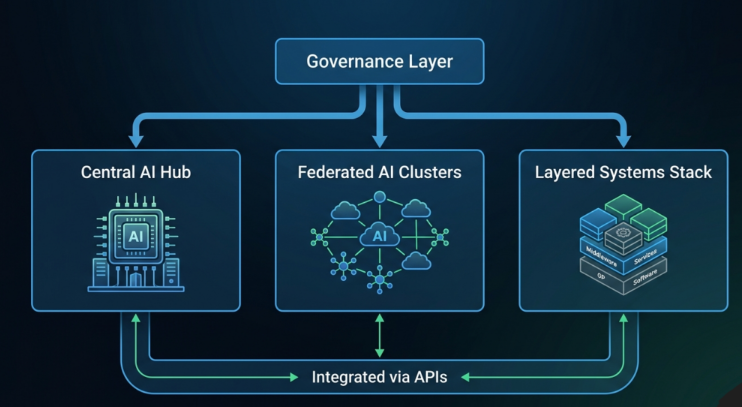
Architectural tactics at the edge focus on reducing response times by narrowing computing pathways, distributing services, and aligning hardware-software boundaries with data locality.
Architectural strategies emphasize edge orchestration to coordinate fragmented resources, minimize cross-node trips, and optimize service placement.
Data locality underpins cache-aware scheduling, local analytics, and resilient fallbacks, enabling deterministic latency, scalable throughput, and empowered operators seeking freedom through lean, predictable edge infrastructures.
Real-World Use Cases of Low-Latency Edge Computing
Real-world deployments demonstrate how ultra-low latency at the edge enables timely decision-making and rapid action across industries, from autonomous vehicles to industrial automation. These use cases illustrate real time analytics and event-driven responses, where edge nodes process signals locally, reducing round-trips and jitter.
Content delivery networks leverage edge computing to optimize streaming, caching, and adaptive bitrate, enhancing user experiences.
Frequently Asked Questions
What Are the Trade-Offs of Deploying Edge Nodes Locally vs. in the Cloud?
Trade-offs include latency budgeting and control: locally deployed edges reduce round-trip delays but demand scalable hardware and maintenance, while cloud deployments offer economies of scale. Edge sustainability emerges as a consideration, balancing capacity, reliability, and long-term environmental impact.
How Does Data Sovereignty Affect Edge Latency Strategies?
In a parable of guardians, data sovereignty shapes edge latency strategies while local deployment grants autonomy and reliability impact. The allegory underscores constrained paths, where sovereignty dictates routing choices, preserving privacy yet potentially increasing latency for cross-border reliability challenges.
Can Edge Computing Handle Sudden Traffic Spikes Without Lag?
Edge computing can absorb sudden traffic surges with distributed compute; bandwidth and microservices scale help, though latency burst occurs if regional dense demand exceeds local processing capacity, necessitating dynamic offloading and predictive scaling to maintain responsiveness.
What’s the Reliability Impact of Edge Failures on Latency?
With graceful degradation, reliability impact of edge failures on latency is mitigated by delayed failover and local redundancy, enabling continued service while automated remediation unfolds; the approach preserves freedom to operate, though latency may subtly drift during transitions.
How Do Latency and Energy Use Trade-Offs Influence Edge Design?
Latency energy tradeoffs influence edge design: designers balance processing proximity, power budgets, and thermal limits to optimize responsiveness while maintaining sustainability. Edge design constraints require innovative architectures, adaptive workload placement, and energy-aware routing to sustain performance under diverse demands.
Conclusion
Edge computing trim latency by pushing compute closer to data sources, enabling near-instant decisions and streaming coherence. By reducing travel distance and localizing processing, it delivers deterministic performance and resilience, even under variable load. Architectural tactics—service distribution, data locality, and smart caching—further minimize cross-node trips. Real-world use cases—from real-time analytics to interactive applications—demonstrate faster response times and predictable outcomes. In short, edge makes latency a solved problem, and performance becomes a given, not an afterthought. (beat dead horse)